
Shopping for mushroom products online can seem straightforward at first. A quick search brings up plenty of websites, attractive product photos, and descriptions that promise a convenient buying experience. However, not every online shop provides the same level of transparency, customer service, or product information.
The challenge is knowing which details deserve attention before placing an order. A professional-looking website does not automatically mean a business is trustworthy, and a low price is not always a good deal. Taking a few minutes to examine a seller can help you avoid misleading claims, unexpected costs, and unnecessary risks.
Whether you are researching culinary mushrooms, mushroom-growing supplies, or other mushroom-related products, the following checklist explains what to look for when evaluating an online mushroom shop.
1. Check Whether the Business Provides Clear Information
Start with the company itself rather than the products on its homepage. A legitimate retailer should make it reasonably easy for visitors to understand who operates the business and how to get in touch.
Look for an About Us page that explains the company’s background, the types of products it offers, and its approach to serving customers. The information does not need to be lengthy, but it should be specific enough to distinguish the business from a generic storefront.
Contact details are equally important. Check whether the website provides a working email address, a contact form, or another practical way to reach customer support. Depending on the business and local requirements, additional registration or address information may also be appropriate.
Be cautious when a website provides no meaningful business information or makes it difficult to ask questions before purchasing. A missing telephone number alone does not prove fraud, but several missing details together deserve closer attention.
2. Read Product Descriptions Carefully
Product descriptions should explain what is actually being offered. Pictures and product names can be useful, but they rarely provide enough information to make an informed decision on their own.
For culinary mushrooms, useful details may include the species, whether the product is fresh or dried, the package weight, storage instructions, and the expected condition upon delivery. Growing supplies should have clear specifications describing their contents, intended species, and any equipment or materials that must be purchased separately.
Packaged mushroom products require a different set of checks. Read the ingredient list, serving information where applicable, manufacturer details, and any relevant warnings. Claims about ingredients or effects should be supported by credible information rather than vague promotional language.
If the description relies on phrases such as “premium quality” or “best on the market” without explaining what those terms mean, ask for more detail.
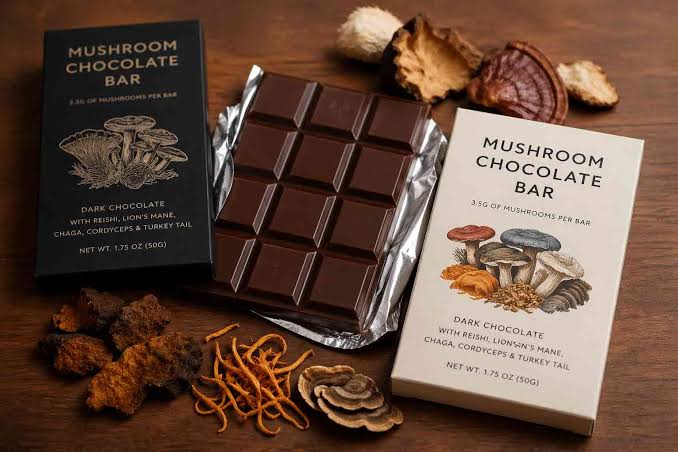
An important rule is to distinguish between a product’s appearance and its verified contents. Packaging, branding, and customer testimonials cannot independently establish the identity, purity, or safety of a substance.
3. Look for Evidence of Product Quality
Quality means different things for different mushroom products. A useful assessment begins with the category being sold.
Fresh culinary mushrooms should have clear information about freshness, storage, packaging, and delivery conditions. Since these products can deteriorate during transport, shipping arrangements matter almost as much as the original product description.
For dried culinary mushrooms, check the stated weight, packaging method, storage recommendations, and any information about the producer or origin. The retailer should explain how the product is packaged and handled without making unsupported claims about its shelf life.
For growing kits intended for edible species, look for clear instructions, species identification, storage requirements, and information about the materials included. Customer support can be particularly helpful when beginners have questions about setup or normal growing conditions.
Products marketed for consumption beyond ordinary culinary use need additional scrutiny. Where testing or certification is relevant, look for identifiable laboratories, the scope of testing, and documentation that corresponds to the actual product or batch. A badge displayed on a website is not, by itself, proof that testing took place.
If important quality questions remain unanswered, consider that a reason to delay the purchase.
4. Examine the Website’s Reputation
Customer reviews can provide useful clues, especially when they describe specific experiences rather than repeating general praise.
Look beyond the testimonials displayed on the retailer’s own website. Independent review platforms, consumer forums, and relevant discussion communities may offer a broader picture of how a business handles orders, complaints, and refunds.
Pay attention to recurring patterns. Several customers reporting missing deliveries, unresponsive support, unexplained charges, or difficulty obtaining refunds may indicate a problem worth investigating.
At the same time, one negative review does not necessarily establish that a business is unreliable. Shipping delays and other isolated issues can happen to legitimate retailers. The important question is whether complaints are consistent and whether the company responds constructively.
Be skeptical of review pages filled with nearly identical comments, vague praise, or an unusually large number of reviews published within a short period. These patterns do not prove that reviews are fake, but they justify looking for additional evidence.
A trustworthy assessment considers the overall pattern of feedback rather than relying on a single rating.
5. Review Prices Before Comparing Offers
Price comparisons are most useful when the products being compared are genuinely equivalent.
Start by checking the package size, quantity, ingredients, product specifications, and included accessories. A smaller package can look inexpensive until you calculate its price per gram or unit. Likewise, a kit advertised at a low price may exclude equipment or supplies that another seller includes.
Shipping charges also affect the final cost. Some shops advertise low product prices but add substantial delivery fees at checkout. Others offer free shipping only after a minimum spend. Review these conditions before deciding which offer provides better value.
Be particularly cautious of extreme discounts, countdown timers that continually reset, and claims that an offer will disappear within minutes. These tactics can pressure customers into making decisions without checking the details.
An unusually low price is not automatic proof of a scam. However, when it appears alongside unclear product descriptions, unverifiable claims, and limited contact information, the overall risk deserves serious consideration.
6. Read Shipping, Returns, and Refund Policies
Shipping policies can reveal how well a retailer has considered the practical side of selling online.
Check the estimated delivery window, available destinations, tracking arrangements, and procedures for dealing with damaged or missing packages. For perishable products, look for appropriate packaging and delivery information.
Next, read the returns and refund policy. Find out whether unopened products can be returned, what happens when an order arrives damaged, and how customers should report an incorrect item. Some categories of food and perishable goods have return restrictions, so policies should explain the applicable conditions clearly.
For regulated or restricted products, delivery may also be subject to legal limitations. Do not assume that a retailer’s willingness to accept an order means the product can lawfully be sold, shipped, imported, or possessed in your location.
Save a copy of the order confirmation and relevant policy pages. If a dispute arises later, these records can help establish what the seller promised at the time of purchase.
7. Make Sure Checkout Is Secure
Before entering payment information, check that the checkout page uses HTTPS and that the browser does not display a security warning. HTTPS helps protect information in transit, although it does not establish that the merchant itself is honest.
Look at the payment options and whether the checkout process provides a clear order summary. You should be able to see the products selected, shipping charges, taxes where applicable, and the final amount before confirming payment.
Avoid websites that demand unnecessary personal information or redirect you to unfamiliar payment pages without a clear explanation. Be particularly careful with requests to send money through irreversible methods when the seller has not established a credible business presence.
Using a payment method that offers appropriate dispute protections may provide an additional safeguard. Review the provider’s terms, since protection varies by payment method, transaction type, and location.
After completing an order, retain the receipt and transaction reference. These records are useful if the charge differs from the amount shown at checkout or the order does not arrive.
8. Check Privacy and Customer Support
An online shop may collect your name, delivery address, email address, and payment-related information. Its privacy policy should explain what information is collected, why it is needed, and how it is handled.
Look for a clear explanation of whether information is shared with payment processors, delivery companies, or other service providers. Be wary of websites that make broad privacy promises without providing any meaningful explanation of their practices.
Customer support is another useful indicator. Before making a significant purchase, consider sending a straightforward question about a product specification, shipping estimate, or return condition.
The response can help you assess whether the business communicates clearly and whether its staff appear familiar with the products they sell. A delayed response does not necessarily indicate dishonesty, but repeated silence or evasive answers can be a warning sign.
Keep in mind that professional language alone is not enough. The quality and consistency of the information matter more than how polished the response sounds.

9. Verify Legal Compliance and Safety Information
Mushroom products are not all subject to the same rules. Culinary mushrooms, dietary products, cultivation materials, and products containing controlled substances can have very different legal and safety requirements.
Before ordering, identify the exact product category and check the rules that apply where you live. In Canada, for example, psilocybin and psilocin are controlled substances under federal law, subject to specific legal exemptions and authorizations. A website advertising a product does not establish that its sale or possession is lawful.
Avoid relying solely on a retailer’s claims that a product is legal everywhere or that customs restrictions never apply. Consult official government information when the legal status is uncertain.
Safety information deserves the same attention. Be cautious of unsupported medical claims, promises of guaranteed effects, or statements suggesting that a product is risk-free. Products with unclear ingredients or uncertain composition can present serious health risks.
A responsible purchasing decision begins with understanding what a product is, what is known about it, and which rules govern it.
10. Use a Final Checklist Before Ordering
Once you have reviewed the website, take a final look at the details. This is particularly useful when comparing several shops that appear similar.
Use the following checklist to organize your decision:
- The business provides clear and consistent contact information.
- Product descriptions include relevant specifications and ingredients.
- Quality claims are supported by appropriate evidence.
- Independent reviews do not reveal unresolved recurring problems.
- The total price includes clearly explained shipping charges and fees.
- Shipping, return, and refund conditions are easy to understand.
- The checkout process is secure and provides a clear order summary.
- The privacy policy explains how personal information is handled.
- Customer support responds with useful, specific information.
- The product and its sale comply with applicable local laws.
No single item guarantees that a retailer is trustworthy. Instead, use the checklist to identify gaps and decide whether the available information is sufficient to proceed.
Final Thoughts
Evaluating an online magic mushroom shop does not require specialist knowledge, but it does require a little patience. The most useful approach is to look beyond product photographs and promotional offers and examine the business, product information, customer feedback, payment process, and relevant legal requirements.
A retailer that communicates clearly, explains its policies, and provides verifiable information makes it easier for customers to make informed decisions. Conversely, missing details, unsupported claims, and pressure to pay quickly are good reasons to pause.
Before placing an order, take time to compare the available information and ask questions whenever something is unclear. A few careful checks can help you avoid preventable problems and make more informed choices when shopping online.




Leave a Reply